
Choosing the right water control gate begins with the site, not the product catalog. Flow rate, water depth, channel width, sediment, debris, and operating frequency all shape the decision. A gate beside a quiet irrigation canal faces different demands from one protecting a stormwater basin or treatment facility.
Hydraulic engineer Dr. Robert H. Kadavy offers a practical reminder: “A hydraulic structure must perform reliably under the conditions for which it was designed.” That principle deserves close attention. A stainless-steel slide gate may suit a clean, controlled channel, while a cast-iron sluice gate may better tolerate abrasive sediment. A flap gate can prevent backflow, but it may respond poorly when debris blocks the seating surface.
Measure the opening carefully.
Small errors become expensive.
The selection process should also examine head pressure, corrosion exposure, sealing performance, access, and maintenance space. Operators need to know whether the gate will be handwheel-operated, electrically actuated, or integrated with remote monitoring. Emergency closure matters too. A gate that works smoothly during testing may struggle after months of silt, rust, and neglected lubrication.
Material compatibility is often underestimated. So is installation quality. Even a well-engineered water control gate can leak when the frame is misaligned or the concrete surface is uneven. Project teams should review drawings, manufacturer testing, service records, and applicable regional requirements before approval. The cheapest option may not remain economical after repeated repairs.
There is no universal gate.
Good selection balances hydraulic performance, durability, safety, budget, and realistic field conditions. It also leaves room for honest reassessment. Conditions change. Your original assumptions may be wrong.
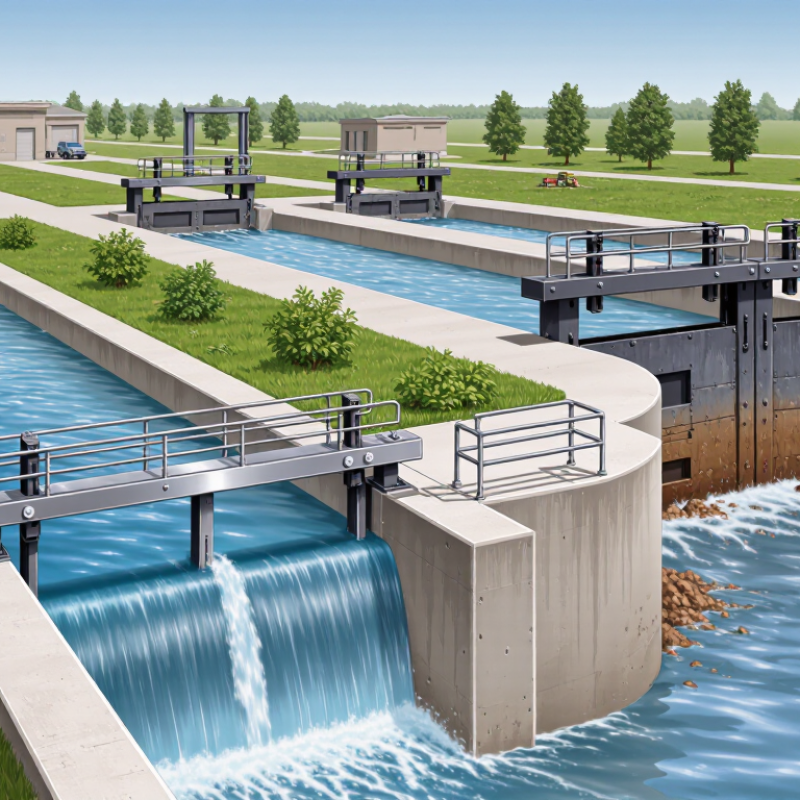
Choosing a water control gate starts with the project’s actual demands, not the gate’s appearance. Define the channel width, operating level, drainage purpose, and expected service life. A small irrigation channel needs different control than a flood bypass or treatment basin. Measure the opening carefully. A few misplaced millimeters can create installation problems.
Water flow conditions often decide the gate type. Record normal flow, peak flow, water depth, velocity, and possible debris. Fast water can produce vibration, leakage, and difficult operation. Sediment may collect along the sill and prevent full closure. In one site assessment, the calculated flow looked manageable, but floating branches changed the operating behavior. The original assumption was too simple.
Think about head pressure as well. A gate exposed to water on one side may need a different structure from one facing pressure on both sides. Check corrosion risks, temperature changes, access space, and the available lifting method. Manual operation may suit a remote field, while a monitored facility may require powered control and position feedback. Maintenance access matters.
Keep records.
Use measurements from several seasons when possible. Design data can be incomplete, especially on older sites. I have seen projects rely on a single dry-weather reading, then struggle during heavy rain. That experience supports a cautious approach: compare field observations with hydraulic calculations, inspect the foundation, and allow room for adjustment. A reliable gate should control water predictably, even when real conditions are less tidy than the drawings.
| Project Requirement | Relevant Water Condition | Suitable Gate Type | Typical Design Considerations | Recommended Selection Criteria |
|---|---|---|---|---|
| Open-channel flow regulation | Water flows through a channel with a free surface and the gate must adjust the upstream or downstream water level. | Slide gate or sluice gate | Gate opening, channel geometry, flow velocity, sediment accumulation, and side-seal performance. | Select a gate sized for the design discharge and verify that the gate can operate under the maximum differential head. |
| Isolation of a channel, culvert, or intake | The gate is normally open but must stop flow for inspection, maintenance, or emergency response. | Slide gate, stop gate, or emergency closure gate | Required closure time, upstream head, debris loading, access for maintenance, and fail-safe operating arrangements. | Use a gate rated for emergency loading if rapid isolation is required; confirm whether closure is permitted under flowing-water conditions. |
| Precise flow-rate control | The required discharge varies frequently and must be adjusted in response to measured level or flow. | Modulating slide gate or automated sluice gate | Actuator thrust, gate position feedback, control-loop response, power availability, and manual override. | Specify the operating range, positioning accuracy, control signal, duty cycle, and allowable adjustment speed. |
| Backflow prevention | Flow direction can reverse because of tides, storm surges, pump shutdown, or downstream water-level changes. | Flap gate or flap-type check gate | Opening head, reverse-pressure rating, hinge protection, buoyancy, debris interference, and seating alignment. | Choose a configuration that opens at the available forward head and closes reliably under the expected reverse head. |
| Flood protection and stormwater discharge | Flow may be intermittent, high during storms, and contaminated with floating debris and suspended solids. | Flap gate, sluice gate, or hydraulically assisted gate | Peak discharge, debris passage, corrosion exposure, reverse flow, and access after extreme events. | Base the design on the required flood level and peak flow rather than average operating conditions. |
| High-pressure or deep-water isolation | A large static head or pressure difference acts across the closed gate. | Pressure-rated slide gate or specialized head gate | Structural deflection, guide strength, sealing pressure, operating thrust, cavitation risk, and hydraulic transients. | Confirm the allowable head for both seating and unseating directions and obtain structural verification for the gate assembly. |
| Wastewater or sewage service | Water may contain grit, fibrous solids, grease, corrosive chemicals, and biologically active contaminants. | Heavy-duty slide gate or channel gate | Non-clogging clearances, flush-bottom sealing, abrasion resistance, corrosion protection, and cleaning access. | Specify the solids size, grit concentration, chemical exposure, leakage requirement, and cleaning frequency. |
| Potable-water or clean-water service | Water quality, hygiene, and material compatibility are more important than solids-handling capacity. | Sealed slide gate or resilient-seated gate | Approved wetted materials, smooth surfaces, low leakage, corrosion resistance, and cleanable construction. | Verify that wetted components, coatings, elastomers, and lubricants meet the applicable water-quality requirements. |
| Large-volume irrigation or reservoir control | The system may experience seasonal operation, variable reservoir levels, sediment, and long periods of inactivity. | Radial gate, slide gate, or fixed-wheel gate | Large opening size, hoist capacity, vibration, sediment management, corrosion protection, and reliable restart after inactivity. | Compare gate weight, hydraulic load, operating frequency, available lifting equipment, and maintenance resources. |
| Limited installation space | The structure has restricted headroom, narrow side clearances, or difficult access for lifting and maintenance. | Compact slide gate or wall-mounted gate | Frame depth, stem extension, actuator location, removable components, and access for seal replacement. | Review the complete operating envelope, including stem travel, actuator clearance, lifting path, and maintenance access. |
| Remote or unmanned operation | The gate must operate with limited site visits and may be exposed to weather, flooding, or power interruptions. | Motorized or hydraulic actuated gate | Local and remote controls, position indication, backup power, communication reliability, alarms, and manual override. | Define the required fail position and verify operation during loss of power, communication, or control signal. |
| High debris or sediment load | The flow carries sand, gravel, vegetation, trash, or other materials that can obstruct the gate or damage seals. | Heavy-duty slide gate, flap gate, or debris-tolerant gate arrangement | Abrasion-resistant materials, protected guides, accessible cleaning points, adequate clearances, and upstream screening where appropriate. | Use measured or conservatively estimated solids characteristics and include a maintenance plan for debris removal and seal inspection. |